
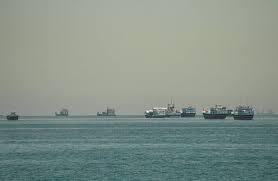
US Stikes Iran’s Missile sites, mine-laying boats near Hormuz
Introduction
Marco Rubio, the State Secretary of State, who is on a visit to India and is scheduled to attend the QUAD summit on Tuesday (May 26), has given his opinion on the latest strike by the Trump Administration. Pointing out that the main aim of the US is to open the Strait of Hormuz, Rubio expressed hope for a possible deal with Tehran despite the strikes. Calling the blockage of Strait of Hormuz “illegal and Unlawful”, the US Secretary of State said that there is back and forth on the language of the final deal with Iran.
what Happened
On the morning of May 26, 2026, US Central Commandannounced that American forces had conducted what it described as “self-defence” strikes in southern Iran — targeting two Islamic Revolutionary Guard Corps (IRGC) vessels and a surface-to-air missile site in the Bandar Abbas area, Iran’s main naval base on the Strait of Hormuz.
The trigger, according to a senior US official cited by Fox News, was the detection of two IRGC boats in the act of laying mines in the strategically critical Strait. Simultaneously, a missile site reportedly locked on to US warplanes operating in the area. American forces responded, destroying both vessels and the SAM installation. Iranian state television reported four fatalities; the total casualty count remained unclear.
“The strikes were over for now – but Iran’s military said it had relaliated by attacking US naval vessels in the Strait.”
Explosions rippled across a wide arc of southern Iran. Tasnim news agency reported hearing three detonations in Bandar Abbas itself, while Fars news agency logged blasts near Sirik and Jask further along the coastline. Iranian authorities warned of a “decisive response” to any further US military action, raising fears of wider escalation.
Despite the violence, American and Iranian officials were at pains to insist the strikes did not signal the collapse of an ongoing ceasefire arrangement. Two US sources told Fox News the military action was “limited in scope and intent.” Meanwhile, President Donald Trump posted on Truth Social that negotiations over Iran’s enriched uranium stockpile were “proceeding nicely,” and that Iran had “in principle” agreed to surrender its enriched uranium for destruction.
The Strait of Hormuz: The World’s Most Pressurised Chokepoint
- 20% of global oil supply passes through here daily.
- 54 km width at the narrowest navigable point.
- 20M barrels of oil transited per day in peacetime
The Explosions rippled across a wide arc of southern Iran. Tasnim news agency reported hearing three detonations in Bandar Abbas itself, while Fars news agency logged blasts near Sirik and Jask further along the coastline. Iranian authorities warned of a “decisive response” to any further US military action, raising fears of wider escalation.
Despite the violence, American and Iranian officials were at pains to insist the strikes did not signal the collapse of an ongoing ceasefire arrangement. Two US sources told Fox News the military action was “limited in scope and intent.” Meanwhile, President Donald Trump posted on Truth Social that negotiations over Iran’s enriched uranium stockpile were “proceeding nicely,” and that Iran had “in principle” agreed to surrender its enriched uranium for destruction.
TIMELINE OF ESCALATION
EARLY MARCH 2026 – US and Israel launch coordinated strikes on Iran — “Operation Epic Fury.” Fires break out at Iran’s Bandar Abbas naval HQ. Satellite imagery shows multiple vessels ablaze. Tanker traffic through Hormuz effectively stalls.
11 MARCH 2026 – US Central Command destroys 16 Iranian mine-laying vessels near the Strait. President Trump warns: “If mines are placed and not removed immediately, the military consequences for Iran will be unprecedented.”
18 MARHC 2026 – US forces use 5,000-pound bunker-buster bombs (GBU-72 deep penetrators) on hardened Iranian anti-ship missile sites along the Hormuz coastline.
26 MAY 2026 – Despite a nominal ceasefire, US forces strike again — two IRGC mine-laying boats and a SAM site near Bandar Abbas destroyed. Iran retaliates. Peace talks continue in parallel. Four reported dead.
International Law: What Rules Were Broken?
The strikes — however tactically explicable — raise profound questions under international law. The following legal frameworks are directly implicated by the actions of both parties.
Prohibition on the use of Force (UN Charter)
Article 2(4) : Prohibition on the Use of Force Against State Sovereignty – Article 2(4) prohibits member states from using force “against the territorial integrity or political independence of any state.” US strikes on Iranian soil and naval assets — regardless of provocation — constitute a use of force against a sovereign nation. While Washington invokes Article 51 self-defence, legal scholars note that anticipatory or pre-emptive self-defence against non-imminent threats remains deeply contested under the Charter.
Right of self – defence v. Proportionality
Article 51 – Self Defence Must Be Necessary and Proportionate – Article 51 allows self-defence only if an armed attack has occurred or is genuinely imminent. Even valid self-defence claims are bounded by the principles of necessity and proportionality. Critics argue that striking sovereign Iranian territory, its naval headquarters, and missile infrastructure in response to two patrol boats far exceeds a proportionate defensive response, potentially rendering the action unlawful even if the mine-laying triggered the right.
Freedom of Navigation and Unclos
Article 17, 19, 38 – Iran’s Mine – Laying Violates Freedom of Navigation – The Strait of Hormuz is an international strait used for navigation under UNCLOS Article 38, guaranteeing all states the right of transit passage. Iran’s deliberate mining of this waterway — designed to obstruct commercial shipping — constitutes a grave violation of freedom of navigation and the duty not to hamper transit passage. Mining international straits has also been condemned as a war crime by the International Court of Justice (in the Corfu Channel case, 1949).
Laws of Armed Conflict and Civilian Protection
Geneva Conventions – Distinction, Precaution, and Proportionality in Attack – Both parties are bound by the laws of armed conflict. Strikes must distinguish between military and civilian targets, take all feasible precautions, and ensure civilian harm is not disproportionate to the military advantage gained. Striking Bandar Abbas — which combines military installations with a major commercial port and civilian population — raises serious concerns about compliance with the principle of distinction and precaution, particularly if civilian infrastructure was damaged.
Hague Convention VIII (1907)
Prohibition on Unanchored and indiscriminate naval mines – The 1907 Hague Convention VIII explicitly prohibits laying automatically activated contact mines in the open sea (including international straits), particularly mines that cannot be rendered harmless after a limited time. Iran’s use of mine-laying boats in the Strait of Hormuz, an international waterway, directly violates this century-old convention that remains part of customary international law. The indiscriminate nature of naval mines — which cannot distinguish between warships and oil tankers — makes their use in commercial shipping lanes particularly egregious.
UN Security council resolutions
Unilateral Military Action Outside UN Authorisation – Under the UN Charter, member states are generally required to seek Security Council authorisation before using force except in cases of individual or collective self-defence. The US has not sought a Security Council resolution authorising military operations against Iran, and Russia and China hold veto power that would likely block any such resolution. Conducting sustained offensive operations — including bunker-busting strikes on hardened facilities — without UN authorisation places significant strain on the legal architecture established after World War II.
The Bigger Picture
What makes this moment uniquely dangerous is its schizophrenic quality: diplomats are negotiating enrichment limits and nuclear stockpile transfers in one room while warships trade fire outside. The ceasefire framework, already fragile, is being stress-tested in real time.
If Iran’s mine-laying was an attempt to strengthen its hand at the negotiating table — demonstrating that it retains the ability to disrupt global energy supplies — the US strikes were a mirror message: that Washington will enforce freedom of navigation regardless of the diplomatic track.
Both signals are rational in isolation. Combined, they create an escalation ladder with no clear upper rung. The Strait of Hormuz has always been the ultimate lever in US-Iran relations. Today, it is being pulled from both ends simultaneously.
Sources: US Central Command, NDTV, Republic World, BusinessToday India, India TV News, Xinhua, Gulf News, Fox News, NewsonAir. This analysis does not constitute legal advice. International law assessments reflect scholarly consensus and ongoing debate.